Once again I've had time off blogging for family health reasons. This time my step-father took ill, had a stroke and has been in hospital for almost two weeks. It is sad to watch someone so independant struggle with the concept of having to rely on others. Here in Australia many elderly people live on their own, cut off from family and community. Some of them die in the houses without anyone knowing until days or weeks after. How tragic!
When we were in the village last year I noticed that my elderly mother-in-law was never without companionship. Her kitchen hut was surrounded by the family huts of her children. One grandchild lived with her to make sure she was fed and safe while a constant stream of people visited her. I can't help thinking that she lives a more satisfying existance than our isolated and lonely old people in Australia.
About Me
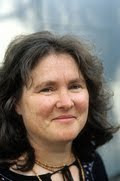
- Beth Montgomery
- Victoria, Australia
- I am an author of Young Adult Fiction books. I worked as a teacher in the Pacific Islands for seven years. Whilst in the Solomon Islands I taught PSSC English before the ethnic tension in 2000 forced a change of plans. I love Pacific literature, art and music. You can find me on Facebook at Beth Montgomery Author.
Friday, June 24, 2011


Thursday, June 16, 2011
Sensational Survivors by Sandra Morris
 |
| Sensational Survivors (Walker Books, 2010) |
Sensational Survivors is an illustrated guide to New Zealand's remarkable wildlife and it is beautiful. With almost A4 dimensions, the pages are filled with coloured pictures of New Zealand's creatures, some famous some obscure.
The watercolour pictures are simple but captivating, particularly the birds and crayfish. Sandra Morris is a gifted wildlife artist who has won awards for her work in the past. Sensational Survivors is a finalist in both the NZ Post Awards and the LIANZA Awards this year.
The text is sparse but has lots of interesting facts for the young reader. Marine animals are given as much attention in the text as the land creatures. There is even a two page spread on extinct species.
This is a delightful book for any children interested in wildlife. I would thoroghly recommend it for primary school aged children.
Wednesday, June 8, 2011
A Painter in Fiji by Douglas Badcock
 |
| A Painter in Fiji (Whitcombe and Tombs, 1973) |
Badcock has captured the colour and vibrance of village life well in his artwork. His style is very 'chunky' with broad brush-strokes used to dipict rock formations, coconut leaves and mountain ranges. Detail is sparse and merely suggested but the effect is pleasing. He uses the elements of shade and light well too.
This book is a good one for the coffee table but it's presentation is dated. Contemporary art books are heaps better in terms of quality, but for something published so long ago this book is definately a treasure.
Wednesday, June 1, 2011
Lord of the Flies by William Golding
 |
| Lord of the Flies (Faber and Faber, 1954) |
Lord of the Flies is a modern classic and one that many literature students have studied the world over. It has become a favourite of mine even though I hated it when I first saw the film as a kid. I was terrified then. The dead airman with his billowing parachute filled my nightmares for years. PSSC students have this book as an option when studying a novel. It is certainly worth considering because the book isn't too long and most editions have plenty of study notes at the end to help you with meaning and finding quotes.
I find the story itself deeply disturbing. How easy it was for a group of boys to kill their peers when forced to fend for themselves on an uninhabited island.
 The book begins with the boys coming together after their plane has been shot down during a war. They are on a small island and no one knows where they are. They decide to organise themselves in order to be rescued by getting a bonfire ready. But their other aim while they wait on the island is 'to have fun'. Rival leaders Jack and Ralph form the basis of the main conflict in the story but the conflict in Ralph's heart is what makes this book such a brilliant character study. His strained relationship with Piggy is perfectly drawn, with every pause, every nuance of meaning so well written, that the reader feels as if they were inside the characters' heads.
Thursday, May 26, 2011
Frangipani by Celestine Hitiura Vaite
This book is another one of my all time favourites. Frangipani is the second book in the series about Materena, professional cleaner and Tahitian woman of wisdom, written by Celestine Hitiura Vaite. This book dwells on Materena's relationship with her teenage daughter Leilani.
Leilani is attractive, very intelligent and just as stubborn as her mother. The two of them constantly lock horns with many hilarious outcomes. This book is just as funny and quirky as Breadfruit but the ending had me in tears. Not that anything horrible happens. It's just that you fall in love with Materena and her children so much that you can feel their pain when seperation occurs.
This is a good book for PSSC students particularly as the main teenage character has so much drive and ambition. She is a good role model for our teenage girls. An enjoyable read from a very talented writer.
 |
| Frangipani (Text, 2004) |
Leilani is attractive, very intelligent and just as stubborn as her mother. The two of them constantly lock horns with many hilarious outcomes. This book is just as funny and quirky as Breadfruit but the ending had me in tears. Not that anything horrible happens. It's just that you fall in love with Materena and her children so much that you can feel their pain when seperation occurs.
This is a good book for PSSC students particularly as the main teenage character has so much drive and ambition. She is a good role model for our teenage girls. An enjoyable read from a very talented writer.
Wednesday, May 18, 2011
Copra
 |
| My sister and I in Savo |
 |
| Copra cutting contest |
Sunday, May 8, 2011
Hunter by Joy Cowley
Hunter is a children's story set in New Zealand with a split plot. In the present are three children, survivor's of a light plane crash in the fiordlands of the south island of New Zealand. In the past is a Maori youth named Hunter, a runaway slave who early in the book comes face to face with a moa. Hunter is so in tune with his surroundings that he has the second sight: the ability to hunt and track any quarry. He also has visions of a white waka flying through the sky and crashing near a cave. If he shuts his eyes he can see survivors, three children who are cold, hungry and injured. He knows he can help them to survive in the wilderness, but his visions drift and fade. He is so drawn to the eldest child that he calls to her, hoping to connect somehow in their very seperate worlds and times.
I really enjoyed this book as it was easy to feel for the characters. Cowley sets the scene of a cold, desolate wilderness. The three children squabble and sink into despair as the rain and mist and sandflies defeat them. They know they have to work together to stay alive but their relationships strain under the pressure.
I really enjoyed this book as it was easy to feel for the characters. Cowley sets the scene of a cold, desolate wilderness. The three children squabble and sink into despair as the rain and mist and sandflies defeat them. They know they have to work together to stay alive but their relationships strain under the pressure.
 |
| Hunter (Puffin, 2005) |
Joy Cowley is a prolific and brilliant children's author. Many parents wouldn't realise that she's written dozens of educational readers that our young kids bring home to read each night. I adored her earlier work The Silent One which I will review here at a later date, but I guess it's enough to say that this lady is a quality writer. In some ways Hunter reminded me of Gary Paulsen's timeless novel Hatchet, but Hunter has a mystical quality that brings alive glimpses of Maori history and culture.
Hunter is probably too easy for PSSC students but it is a great story for older primary and junior secondary school kids. It won the NZ Post Book Awards, Children and Young Adults book of the Year.
Friday, May 6, 2011
The tropical garden
It's autumn now in Victoria and leaves are falling from my fruit trees. The garden doesn't yield much at this time of year except some kiwifruit and silverbeet. I was looking at some photos yesterday of my time in Makira and remembered how easy it was to grow slippery cabbage all year round. We also had peanuts, sweet potato, ginger, tomatoes and beans growing in our garden. Students built a fence around the block to keep out the school cows and the whole area was bordered by the ubiquitous banana plants.
Makira is renowned for its bananas. There were dozens of varieties from big orange cooking types to slim green eating bananas and the more tasty short fat sugar bananas. I reckon the people of Makira made the best banana pudding in all the Solomon Islands.
We also had a huge mango tree in our backyard. In October the flying foxes would feast at night, screeching and fighting. Their noise and the constant thump thump of falling mangoes on my roof would keep me awake. No matter how much I love my garden here in the temperate zone with all its seasonal changes, I still miss my tropical garden which was a constant supply of food.
 |
| My daughter and our haus-girl in our garden. Source: B. Montgomery |
We also had a huge mango tree in our backyard. In October the flying foxes would feast at night, screeching and fighting. Their noise and the constant thump thump of falling mangoes on my roof would keep me awake. No matter how much I love my garden here in the temperate zone with all its seasonal changes, I still miss my tropical garden which was a constant supply of food.
Monday, May 2, 2011
Out of Action
My blogging activity has been on hold for over a week as my family has had some health dramas, chief of which was my five-year-old daughter having an attack of appendicitis. I was surprised how quickly she went from feeling a bit unwell, to being in major pain with a high temperature. Thankfully she had surgery and is now recovering well.
The whole thing made me thankful for modern medicine and surgery techniques. I remember reading Roald Dahl's autobiographical book Boy. He explained that when he was very small his older sister, who was seven, died of appendicitis. His own father a month or so later, filled with grief, almost died of pnemonia. Although his accounts highlight the state of medicine one hundred years ago, in remote regions of Melanesia nothing much has changed. If a sick person can't make the five hour trek to a clinic, their chances of survival are pretty slim. How good it would be if villagers could reach medical aid quickly. I'm sure lots of lives could be saved.
If you haven't read Boy, the book is a real treasure chest of funny anecdotes, revealing Dahl's fascination with sweets (no doubt leading to inspiration for his best-selling Charlie and the Chocolate Factory) and his life as a young boy in boarding school.
On holidays Dahl often visited his ancestoral land of Norway. He picnicked on small islands there and got up to mischief with his brothers and sisters. The islands in the fjords sounded beautiful. But I reckon they would be mighty cold. Give me the tropics any day.
The whole thing made me thankful for modern medicine and surgery techniques. I remember reading Roald Dahl's autobiographical book Boy. He explained that when he was very small his older sister, who was seven, died of appendicitis. His own father a month or so later, filled with grief, almost died of pnemonia. Although his accounts highlight the state of medicine one hundred years ago, in remote regions of Melanesia nothing much has changed. If a sick person can't make the five hour trek to a clinic, their chances of survival are pretty slim. How good it would be if villagers could reach medical aid quickly. I'm sure lots of lives could be saved.
If you haven't read Boy, the book is a real treasure chest of funny anecdotes, revealing Dahl's fascination with sweets (no doubt leading to inspiration for his best-selling Charlie and the Chocolate Factory) and his life as a young boy in boarding school.
On holidays Dahl often visited his ancestoral land of Norway. He picnicked on small islands there and got up to mischief with his brothers and sisters. The islands in the fjords sounded beautiful. But I reckon they would be mighty cold. Give me the tropics any day.
Subscribe to:
Posts (Atom)