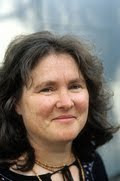
About Me

My photo
Victoria, Australia
I am an author of Young Adult Fiction books. I worked as a teacher in the Pacific Islands for seven years. Whilst in the Solomon Islands I taught PSSC English before the ethnic tension in 2000 forced a change of plans. I love Pacific literature, art and music. You can find me on Facebook at Beth Montgomery Author.
Showing posts with label interview. Show all posts

Wednesday, November 2, 2011

Author Interview: Fleur Beale

Fleur Beale is a kiwi author who has written the terrific Juno of Taris series. The first book in the series, Juno of Taris, won the 2010 Esther Glen Award. The follow up, Fierce September, won the Young Adult Fiction Award in the 2011 NZ Post Children's Book Awards. The final volume, Heart of Danger is available now and published by Random House. I'm reading it right now, so I'll post a review as soon as I finish it. Below is an interview I conducted with Fleur Beale this week.

1                     You are a prolific children’s writer. What is it that you like most about your job?
What I like about being a writer is the freedom. I can work when I want to, and if it's a sunny day I can go to the beach. It's fun too to be in charge of a world that's your own creation. I can also daydream and call it work!
        Can you take us through your typical writing day?
I've got a little office in town in an old building. I go in on the bus in the mornings and write till about 1 or two. Sometimes I'll start again when I get home, or I'll catch up on paperwork. If it's raining, I stay home and write.
     How long did it take you to write the Juno of Taris series and was it originally devised as a series?
When I wrote Juno of Taris I had no thought of writing a series. The idea for that only popped up once the book was published. I wrote the book several years before it was published, but the manuscript got lost on the way to an agent in the US. I printed it out again and when I read it I could see that it needed more work. I threw the manuscript in the cupboard and went off to live in the UK for a year. I didn't look at the story again till some time after I got back home. I read it and still liked the story but by leaving so much time between writing it and revisiting it, I could see clearly where it needed to be worked on. I had to completely rewrite it because the computer the document was on got stolen three days before I was due to leave London and all I had was the discarded manuscript in the cupboard.
       A bio-dome in the Pacific Ocean is an interesting take on speculative fiction. What inspired your idea?
I wanted a remote area where it would be feasible that all communication with the outside world could be cut off. I'd been to the Eden Project in Devon and seen the bio-domes there so I just made the Taris one bigger.
       So far the books in the Juno of Taris series have won some prestigious prizes. Are you surprised by the series’ success so far?
Yes, but very, very delighted!
6                     The blogs you set up were an interesting adjunct to this series. What took you down this path?
I heard a young woman say she could never resist looking up any website address she saw and the blog idea developed from there.

       What are your three favourite island stories?
I'm probably not intrigued by island stories as such, it's more the constraints such an environment places on its inhabitants. I like stories where there are boundaries for the characters to push and struggle against. I enjoyed Mandy Hager's Blood of the Lamb series though, and Anna Mackenzie's Seawreck Stranger trilogy - both of which involve islands.

      If you had to live in an island bio-dome for a year what would your major duties be?
I'd probably be a spinner and weaver. I wouldn't like people to have to depend on my gardening skills!
Thanks Fleur and all the best with your future writing.


Tuesday, March 8, 2011

Author Interview: Mandy Hager

Last week Resurrection, the third book in the Blood of the Lamb trilogy, was released. I interviewed Mandy Hager recently about the series and her writing process. 
Mandy Hager
1.      How did the idea for the Blood of the Lamb series come about? 
It seems weird now to answer this, as the books are a long way from the original idea! But the germ of the idea came from being a vegetarian! I was thinking about the way we treat animals – especially small farm holders – who raise animals with great love and warmth, yet eventually go on to kill and eat them! I was thinking how if you transferred this same kind of exploitative behaviour to children instead of other animals it would seem horrendous... and the book idea started growing from there! Also, I’d worked for 3 years as a writing mentor for a man who was a member of a Fijian cargo cult, and this got me thinking about the religious side of things, and how such a cult could develop.
2.      Did you originally pitch a series or was it at the publisher’s suggestion?
I had been thinking about this theme for a long time and had done quite a lot of research but wanted to walk around a cruise ship (I’m a very visual person and like to be able to explore settings etc so I can get a real feel for them) but couldn’t get on one because after Sept 11th security was so tight they wouldn’t let anybody on unless they were paying passengers! So I put the idea on hold. Later, my publisher jokingly asked if I had an idea that would suit a trilogy – I went home and started thinking about this old idea and realised it had enough story to be broken into 3 books. Luckily, by then I managed to wangle my way onto a cruise ship to look around!

3.      The Crossing strongly portrayed a Gilbertese setting. Have you a Kiribati connection?
No I don’t. But I worked for an organisation for 3 years who did a lot of work with Pacific Island development, so I knew a little about the issues facing many of the Pacific Islands, including issues of colonisation and climate change. At the time I started writing it I spent 3 weeks in Fiji – the first time I’d been to a Pacific Island other than Aotearoa – and this helped me to imagine the world I was creating. Also, I did a LOT of research!
4.      Do you work from a plan or develop the plot as you write a novel? What is your typical writing day?
Yes, I definitely plan – I strongly believe in this for me – I feel that knowing the structure of a book gives it drive and impels the reader through the story. I always know the main plot points before I start – but not how I’m going to get between each one – that’s the bit you have to trust to the magic of creativity – and it always throws up things I’d never have been able to plan in advance! When I’m working on a book I spend quite a lot of time making notes, doing research and planning, and getting to understand characters before I start. Once I start I try to write a chapter a week – write in the mornings and through to about 2 or 3pm, then print off and revise.
5.      Politics and religion are fair game in this series. Did you mean to be so controversial?
Not sure that I’d say I mean to be controversial – but I’m not scared of it! I come from a politically active family, so I guess it’s not surprising. I see things that really worry me about the world and figure that the only way I have any power to try and make things better is to express that worry and to encourage people to look a little harder at the causes and effects. I know the books will probably offend some people – but suspect that if they’re offended they have possibly heard about them but not read them! Because the books really just advocate for fairness, human rights, compassion and love – and how could anyone object to that?! I’m not attacking people’s right to believe in a higher power – but I do believe that everyone has the right to make up their own minds and not be controlled by the institutions who have set themselves up around this. We only have to look at what’s happening today to see the destructive force of using religion to suppress those who don’t do as they’re told by the people in control, and as a means of trying to oppress anyone who thinks differently.
6.      Can you give us an outline of Maryam’s adventures in the third book of the series, Resurrection.
I don’t want to give the plot away – but let’s just say Maryam faces her most challenging situation yet... and that she returns to Onewēre, and that it gets very scary!
7.      Why do you write for young adults?
I really like young adults and respect them – I want to speak to them honestly and say ‘hey – have you thought about things in this way?’ I have 2 children aged 25 and 22 – it terrifies me that they’re growing up in such uncertain times and I try to do everything I can to promote change for a better world. I write for young adults because it’s really important they think about what’s going on and are able to access lots of different points of view about what’s going on – not just the propaganda and rubbish they get fed in mainstream media. I want to try and activate them to ask the hard questions and demand better behaviour and morals from those in power.
8.      What are your favourite island stories?
Sadly there were not many island stories around when I was young, so I’d have to say Swiss Family Robinson and I remember a book I really loved by Armstrong Sperry called ‘The Boy Who Was Afraid.’ More recently, I’ve really enjoyed Lloyd Jones’s Mr Pip and books by Albert Wendt.
9.      If you could visit any island in the world, where would you choose?
Although I’d love to visit more Pacific Islands I’d have to say Zanzibar, off the coast of East Africa. This was where my mother was born, and she loved it so dearly I’d love to go there and experience it for myself.


Wednesday, January 19, 2011

Interview with film makers Amie Batalibasi and Lia Pa'apa'a

Books are relatively late on the scene when it comes to storytelling traditions. Two young women from Melbourne are tapping into the power of real storytelling, the spoken word, and capturing it on film. Their project is called Pacific Stories and you can check it out on the list of blogs to the right of screen. Here's their interview:
1.      Can you describe the Pacific Stories project for us?
Pacific Stories is a project that will consist of a series of discussions, storytelling and filmmaking workshops held in Melbourne from Dec 2010 through to May 2011.  Each participant is supported to develop and produce a short film exploring Melanesian identity. The project is facilitated by documentary filmmaker Amie Batalibasi and cultural diversity educator Lia Pa’apa’a.
   The target group is Pacific Islanders living in Melbourne. In particular, we extend a special invitation to people of Melanesian (PNG, West Papua, Solomon Islands, Fiji, Vanuatu) ancestry as we believe that their current political, environmental and social situation requires particular attention.  
   A Pacific Stories Steering Committee of pacific islanders will guide the project and Multicultural Arts Victoria will provide additional support for the project.
   We hope that participants will benefit by learning and exploring their past and marrying their traditional knowledge with modern digital mediums to find an empowering medium that allows for culturally appropriate and rich dialogue and storytelling.

2.      When did you two first meet and start working together?

Amie: We developed a film project called My Story, My Place - Through the Lens, as part of an Artists In Schools residency.  Lia was teaching at the Grange P-12 College in Hoppers Crossing, Melbourne and I came in as the artist. We worked together with a group of 12 year 5/6 students, who learnt filmmaking skills and then each produced a short film exploring their culture and identity. It was awesome and I think we made a good team so it made sense to do Pacific Stories together - especially because we both have pacific islander backgrounds.
Lia: I was working with culturally diverse young people in the Western suburbs of Melbourne and had been developing different mediums that young people could express and investigate their cultural identity.  Amie approached me through the Artist In Schools program and we were able to develop a film making project that was age appropriate and it worked really well.  Not only did the participants learn about themselves, their family and their countries of origin but they were able to showcase their final works to their community at the "Red Carpet Premier."  The screening engaged parents that had never been to the school before and gave a great sense of pride to everyone involved!
3.      What are your island backgrounds?
Amie: My father is from the Solomon Islands. He is one of 12 kids so I have a whole village full of family back in the Solomons - my island home.  I was born here though, and went to the Solomons for the first time when I was 13.  It was quite a shock to meet all my relatives, hang out in Lilisiana - a traditional style village, paddle canoes etc... but now I go back as often as I can and I love it and it’s my island home.  I miss it when I am over here.  And I am very much, still growing in terms of learning about my culture and family and language. I also try to help my family and my people when I can.  With the help of my good friends, we set up a little organisation called Pacific Community Partnerships (http://www.pacificcommunitypartnerships.org/Home.html) to provide help in any way we can eg. water tanks, education - basic things.
Lia:  I have both Samoan and Tongan heritage from my mother and Native American/Mexican/Irish from my father.  I was born and raised in Melbourne.  Most of my family in Tonga have now relocated to NZ but I still have strong ties with my cousins in my village of Magiagi in Samoa.  It has been a constant journey of self exploration and understanding around my identity and how I identify living in an urban context.  I think many 2nd and 3rd generation Pacific Islanders are feeling the same and it is something that I am hoping to explore through this project.


Amie Batalibasi


4.      Why is film making your preferred medium?
Amie: For me, it’s a natural instinct to document life - people, places, events, everything and anything.  My dad gave me my first camera when I was 10 and from that moment on, I've always had a camera of some sort close by.  I studied photography and art so filmmaking was a natural progression.  But for me, really it’s not about film as such, it’s about storytelling - capturing stories and sharing those stories.  I think that this is so important - in terms of family, history, education and also helping to create change around important issues.  And film is a perfect vehicle to carry these stories and make this happen - right now, it’s such an accessible medium.
Lia:  Although I am not a film maker myself (I am currently developing my skills in Weaving) I believe in the power of digital mediums.  We are an oral culture that has passed down stories immemorial and now we have access to a technology that has the potential to enhance and preserve it.  It is exciting to look at cross-platform ways of maintaining and passing on our knowledge systems and with the current group of participants that we have involved in the project which include educators, visual artists, academics, community arts practitioners and theatre & film producers we have an exciting chance to push our stories in ways that we might not have done individually.
5.      Was storytelling a big part of your childhood?
Amie: That's an interesting question... It’s hard to answer really, but for me, I think I missed out a lot on learning the stories of my family in the Pacific as I was growing up - because I only went there when I was 13.  I guess that’s why it’s so important for me now to capture the stories that my family have.  When I go to visit, I always have my camera out.  And I know that they think it’s important too because they understand that things are changing - people are getting old, climate change is affecting the village, the young people don't have as much access to the traditional ways... I think they see that it’s important to capture these stories so that they don't get lost - plus they always love watching videos and films of themselves!!  We sometimes have screenings in the village and drag the generator out!!
Lia:  Like Amie, it is hard to answer- I was always a book worm and read a lot when I was young and loved being taken away to different lands via the written word.  I was raised with a single mother who had to work full-time to support us so we stayed with our Grandmother many weekends who would read us stories.  As an Aunty of many today I try to incorporate as much "story-time" with my nieces and nephews as possible and challenge myself to tell stories about our family and my experiences and not just from books.
6.      What are your favourite island stories?
Amie: My favourite island stories are the ones that my Dad tells me sometimes - without knowing it, he gets all excited and launches off on a story about what he used to get up to when he was younger and what life was like then back in the Solomons.  Funnily enough, those are the stories I will probably never capture on film!
Lia: My favourite are of the stories of my Grandfather and his cheeky ways in the village as a young boy!  I also love learning and reading about the great voyages that our ancestors took on canoes to travel throughout the Pacific Islands.  I am filled with awe about the technologies and knowledge they had of the region- it is truly inspiring.
7.      If you were sent to stay on a remote island for a year, what three non-essential items would you take with you?

Amie:  I reckon I'd be pretty happy on that remote island without much else!... but I'd say my guitar, some good chocolate and a camera of some sort.
Lia: I would take my loving partner John, a notebook and some pencils to draw.


8.      How has your work empowered Pacific Island people living in Australia?
Amie: Because we have just started, it’s hard to say too much. But personally, I feel that every time I sit in that room with the participants, I feel like it’s a safe space to share stories and to talk about the issues that we face as pacific islanders in Australia.  At the very least, I think that what Pacific Stories provides - a platform and an opportunity to share Pacific Stories with other pacific islanders.  This is a simple thing but very powerful in that it helps to keep our stories alive, our cultures strong and for us to be grounded in our pacific identities.
Lia Pa'apa'a
Lia: Sometimes empowerment is a hard thing to quantify!  I have worked and continue to work for my many communities (Pacific, Mexican, Indigenous Australian, Western suburbs of Melbourne) for the betterment of my peoples.  I have worked hard on myself so that I am able to really listen to what the community needs support with and I do my best to achieve it.  Good community work is about good relationships- we are all in it together at the end of the day.  I hope to continue building on the strengths of our communities to create innovative, sustainable programs that are best practice for the people they service.
9.      Are there any more projects planned?
Amie: There aren't any projects as of yet but I see that this Pacific Stories project could be a great model that could be implemented anywhere really.  Also we have had a great response on our Facebook group (http://www.facebook.com/pages/Pacific-Stories/162562773766940) and Pacific Stories Blog which means that even though this project is based in Melbourne we are reaching a wider audience who can also participate and share their own Pacific Stories by uploading photos, videos and contributing to the discussions.
Lia: I am definitely feeling like with the current group of participants, Pacific Stories could become the premise of many great (and needed) things in the future.  I am also involved with the Pacific Women's Weaving Circle that one of our participants Lisa co-founded which I believe is going to gain legs over the next 12 months. My day job is as the Programs Manager for the Music Outback Foundation that delivers music education to remote Indigenous communities across three states.  So always busy, but always looking for new exciting projects to get involved in!!


Monday, November 15, 2010

Author Interview: Anna Mackenzie

Anna Mackenzie is a New Zealand author who writes for teenagers (just like me). Anna's third book, The Sea-wreck Stranger, won The 2008 NZ Post Book Award for children and Young Adults and the Sir Julius Vogel Award for Fantasy and Sci Fi. Maybe I seem to go on and on about this book, but it is one of my fav's and when Anna agreed to do an interview I was rapt. So here are her answers...

1.      The Sea-wreck Stranger is set in a future world. Are you naturally drawn to speculative fiction or was it hard to create this future island in your head?
Dunnett Island came easily, as did the issues and challenges my characters face in this future – and not very happy – world. On an interpersonal level, the challenges are universal in terms of time setting, I think, but the environmental issues are more specifically located in a not very distant future. That the community in Vidya has responded differently to that on Dunnett is one of the underlying themes of the story – and one that gets further attention in the sequel, Ebony Hill.

2.       The island itself is very real. What is your inspiration for this setting?
Dunnett is an amalgam of a number of places I’ve lived or visited, with a hearty dose of imagination thrown in. I wanted to create a setting that could be anywhere – I think YA fiction works well when the reader can transpose their own familiar reference points into the setting, so I have tried to keep it non-specific. That said, the cave at one end of Skellap Bay is a real place, and various aspects of the island’s topography and isolation are also taken from a real location.

3.      How do you go about forming characters for your stories?
I usually start with a single, simple idea. In the case of The Sea-wreck Stranger I was watching my children and their friends mess about on a lakefront, rummaging through items washed up against an old log. I thought ‘what if what you find is not what you expect?’, and the idea grew – quite quickly – into the novel. I walked back to the house with the plan of noting down the idea and wrote several chapters straight away. Ness’s character, and those of the people around her, formed immediately; plot came later.
The common model for me is that a character develops first, often simultaneously in my head and on paper, and as I write about them I ‘discover’ what their story is.


4.      How long does it take you to write a book? Can you take us through your process?
It varies a little. A first draft usually takes between four and seven months. I then spend a similar period of time editing and perfecting, including time when I set the book aside and ignore it. I sometimes have several books at different stages – I’ll be ‘ignoring’ one while I’m writing the first draft of another, so they leapfrog a little. The publishing process also works on different timeframes. My last few books have come out more quickly than my first.

5.      The sequel, Ebony Hill, has been released in NZ. Was it easier to write than The Sea-wreck Stranger? Can you tell us a bit about the story?
In Ebony Hill, we meet up with Ness two years down the track – and discover, as Ness has, that things are never simple or perfect. Vidya has high ideals and the community works hard to achieve them – but they, like the islanders, are struggling with a world in ruins. Ness is unsure of her own place in her new society, and none of her uncertainty is helped by her confused feelings for Dev or by the arrival of an interloper who seems to both threaten and clarify her nebulous sense of belonging.
Just when she thinks she might have found a promising path, the world around her erupts into violence. Practical and ethical dilemmas force Ness to explore her own beliefs and discover both strengths and weaknesses as she, and those around her, are tested to the limits.
 
Strangely, I found this second book harder to write than The Sea-wreck Stranger. This was partly because my plan was to write a sequel, and I consequently kept trying to make the next stage of Ness’s story fit into a single book. When I finally accepted that it wouldn’t – I’m just now finishing the third book of the trilogy – it became easier again. A great example of how, as a writer, you have to follow the story rather than trying to make the story follow a preconceived notion about it!

6.      What are your favourite Island stories?
When I was about 6 my father read us a novel by Joyce West called ‘The Sea Islanders’ which I remember as being about a family as warm and unruly as my own, and containing a signature refrain from the youngest child: ‘”I’m hungry,” said Rory.’
I studied William Golding’s ‘Lord of the Flies’ at school, and was disturbed by the author’s bleak subtext. As both a teenaged and adult reader I much admire Ursula le Guinn’s Earthsea Cycle (comprising two trilogies written 20 years apart), which offers a masterful example of the way fantasy can explore the realities of human nature and the trials and issues we all face in finding a path into adulthood.
Islands allow writers to explore the impact of isolation on individuals and social hierarchies – certainly true in The Sea-wreck Stranger, but also true of communities isolated by less physical barriers. Fleur Beale’s ‘I am not Esther’, about a closed religious community, is a chilling YA example. Amongst adult novels, Margaret Attwood’s ‘The Handmaid’s Tale’, set in a dark future offering a rigid and oppressive social hierarchy, stands out. 
Stories speculating on dystopian futures influenced me from a young age – the BBC TV series of the 1970s ‘The Survivors’ and John Wyndham’s ‘Day of the Triffids’ (also serialised by the BBC) – lived in my head for many years. And on dystopian future novels, I would be remiss not to mention Cormac McCarthy’s unsettlingly dark but masterfully written ‘The Road’. See the film if you will, but for sheer beauty of writing, read the book.

7.      If you were stranded on an island for a year, what three non-essential items would you take with you?
A clarinet (I’ve just begun learning, and stranded on an island, I might perhaps have time to make some progress! The great thing about a clarinet is that even when you’re not very good, the sounds aren’t too unpleasant.)

The complete works of William Shakespeare – for the beauty and cadence of his sentences, for his linguistic ingenuity, and for his acute observation and ability to generate phrases whose longevity often transcends an awareness of their source.

And thirdly, inevitably perhaps, notebooks and pencils.

8.      Why do you write for young adults?
There’s no simple answer. I like kids, I’m fascinated by human behaviour and motivation, and I think the teen years are incredibly interesting. It’s as teens that we make the choices that determine the adults we’ll become, it’s generally when we’re hit with a mountain of challenges and trials, and it’s when we build the resources we’ll need to cope with everything the rest of life has to throw at us. Growing up isn’t a straightforward business, but it’s something we all do (sooner or later). I think it’s a period of our lives that deserves as much attention as we can give it.
I also have two teenaged children, though when I began writing they were youngsters. They’re kind of useful though – as sounding boards, zoological specimens and reminders of reality.

9.      The Sea Wreck Stranger won many awards. As a writer, do you feel the pressure is now on you to perform?
Actually, no more than I always feel. I want every book to be the best it can possibly be – I’m sure every writer does. A book that’s not yet finished still has that potential; the pressure is always there. With every book I write, I aim to learn.